- On the eve of the Mt Kailash trip
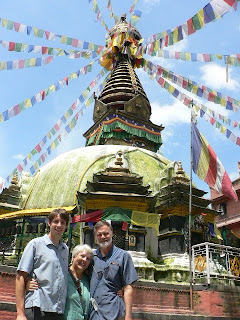 Julian and I are packed up for our trip to Mt Kailash. Cynthia will be staying with the family of Deepak Mohat, owner of Adventure Thirdpole Trekking. His wife, Lalu was a former Peace Corps language instructor before the Peace Corps pulled out of Nepal in 2004. They have two children, a girl 8 and a boy 19. Cynthia is looking forward to living with the family and learning some Nepali.Julian and I fly to Nepalgunj tomorrow, then Simikot the next day, where we begin our trek to the Tibet border, then on to Lake Manasarovar and Mt. Kailash.When we arrived in Nepal, my Blackberry was unable to connect to Nepal Telecom, so I called AT&T. They had me remove the SIM card and reinsert it, which I did. Now, I am unable to use the Blackberry for communication at all. I get messages about “Iniialization Failed”. I suspect I will have to reinstall the operating system on the Blackberry. But no time for that now.So for the next three weeks, there will be a lull in our blog postings — Cynthia may post some entries, but there won’t be any photos until Julian and I have returned to Kathmandu on about September 19.Thank you to all you readers who motivate us to keep in touch.David
 - In KathmanduSeptember 1I said farewell to David and Julian this morning as they left Kathmandu to begin thier Mt. Kailash adventure. I am very excited for them as they have a wonderful guide and thorough preparations have been made. They both seem well prepared, physically and mentally. Each time I read anything about this pilgrimage I felt ready mentally, but unfortunately, my knees have a way of reminding me that I may need more new body parts before attempting something of this magnitude.I will move to the home of Deepak Mohat, the director of Third Pole Treking. We met him 14 years ago when we treked in the Langtang region here and he has arranged this trek for David. He and his family have invited me to spend this time in their home. We had dinner with them the other evening and they were all so warm and welcoming. I am sure this will be a very interesting time.September 4We are reminded that we have no control over weather. The mountain village David and Julian were to fly to has had bad weather so they have been stuck in Nepalgunge in southwesteern Nepal. They are hoping a helicopter can get them there today. Deepak has been trying hard to figure and refigure things out for them.In the meantime I am comfortably settled in the the Mohat home with a delightful 10 year old girl to introduce me to the neighborhood and the location of each and every chocolate shop. Anuj is their 19 year old son who is in the process of applying to college in the USA. He is suffering writer’s block in his essay, so I am trying to offer encouragement. Lalu is a delightful women who thinks and feels deeply. A former Nepali teacher for the Peace Corp, she teaches private English and Nepali classes.Adita, the 10 year old, is trying to convince me that anyone over 55 should not do any work around the house. I almost sneak around to do some dishes just to feel a bit useful.Kathmandu seems to have deteriorated. With the government in a stalemate, there has been little work on badly needed infrasructure projects. The population has exploded with people moving in from the countryside. There are countless motor bikes and scooters as well as cars (far fewer rickshaws), but the air is clearer than in 1995 as they have banned the most polluting vehicles.It is heartwarming for me to be here after an absense of 14 years.
- September 6Weather – Beyond our controlDavid and Julian had 3 days delay in their flight to the mountain village of Simikot due to weather. This is near the end of the monsoon season so weather is unpredictable. With no room for error in the small landing strip of the mountain village, caution prevails. They were waiting in a small, very hot town in southwestern Nepal and finally yesterday they were able to helicopter to the village. Hopefully they will begin their trek to the Tibet border today. They will then cross the border and begin the Mt. Kaikash pilgrimge. Due to the delay, they will have to trek the Nepali portion faster than planned as the Tibet visa is for a very limited time. I am fortunate to be staying with Deepak. Though David and I have no means of connecting directly, Deepak is able to get reports and lets me know how things are going. We may not hear anything now until they reach the border.In the meantime, I remain happily here in Kathmandu. I will start volunteering this week and I have begun studying Nepali with my hostess, Lalu. Already I begin to imagine myself returning to Nepal in the future.
- September 13,2009Rested in KatmanduI continue to become better acquainted with Kathmandu. I finally found my way out of Ranibari, (Queen’s Garden) where I am staying, a warren of small street and alleys . Making only two wrong turns on my way out, I felt quite confident I could make my way back. I made my way to Thamel, the main shopping district and tourist center, home to countless trekking agencies and restaurants of every description. I then made my way directly to Deepaks office to print out material for the workshops I will give. As I later wandered around Thamel, I attempted to keep track of the number of languages I heard but soon lost track as I dodged rickshays, bicycles, motorbikes, cars, tuk tuks, buses, and trucks all moving on streets in different directions. If takes a certain fearlessness to drive on these streets as it seems to be a constant game of chicken – who will back down first. I am quite pleased to have figured out how to cross these streets with a degree of confidence. I did, however, sacrifice what little dignity I had as I returned home in a light rain and my feet slipped from under me and I found myself in the mud one all fours. I cleaned up as best I could with the tissues I had, but basically I was a muddy mess. I was really too muddy to go in any place to clean up so I continued on home pretending it was a new natural look.I am called aunty almost universally here. I am convinced it is because of my gray hair. I see very few people with gray hair other than those who are really elderly and infirm. People my age still have pitch black hair. hmmmmmm…David and Julian were finally able to catch up with their itenerary in Tibet by giving up rest days. I eagerly await the details of their trek and the Kora around Mt. Kailash which they are in the midst of as I write.
- Our approach to Mt Kailash from Western Nepal
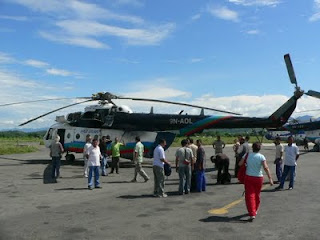
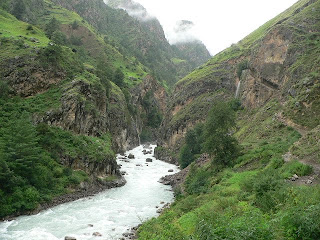
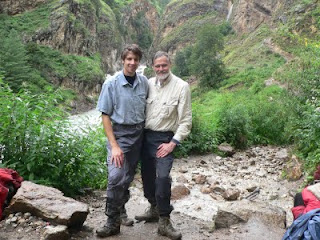
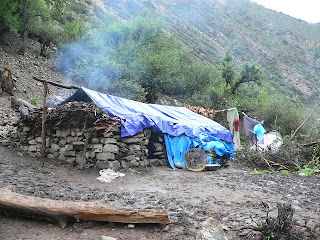 We plan to trek through Western Nepal before crossing into Tibet to begin our walking pilgrimage (kora) around Mt Kailash.Tuesday Sep 1 Arrived in Nepalgunj, a town in Western Nepal near the Indian border. Loaded up a trailer with our gear and checked in at Hotel Sneha. Increasing clouds.Wednesday, Sep 2 Weather in Simikot reported to be cloudy. Flight cancelled. Julian and I each went jogging. I met him on his way back from a run to a nearby army barracks and we returned to the hotel together. After a mid-day meal of dahlbhat, we went for a walk around town. Then slept for a few hours in the afternoon. Thursday, Sep 3 Around 5:00 am I got up to shut off the noisy air conditioner I heard a dripping sound and figured it was condensation from the AC. It lasted several minutes. I remember thinking, “That AC unit sure draws out a lot of moisture from the air!” Then I realized, it wasn’t condensation from the AC; it was raining outside. We learned at the desk that the rain in Nepalgunj and clouds in Simikot had caused flights to be cancelled a second day. No need to go to the airport. Our guide, Lal Tharung, started discussing the possibility of returning to Kathmandu, then taking a Jeep to Mt Kailash, instead of trekking from Simikot. We discussed this with Deepak Mahat, owner of Thirdpole Treks. We decided to wait one more day for the weather to clear. If the flight is cancelled a third time, we have the option of flying back to Kathmandu and executing Plan B. Julian is hoping to avoid the long drive from Kathmandu to Mt Kailash and back. So am I except it may be a better option than hanging out in Nepalgunj any longer (and losing any acclimitization I may have gained in Lhasa). The rain gradually increased. Julian took this as a welcome respite from the heat — he went ahead jogging in the rain. After running with him to the end of the driveway, I turned around and returned to the hotel, where I dried out my clothes. Another day of dahlbaht (rice, lentils and vegetables), an afternoon nap and some reading. Julian just finished the book, Three Cups of Tea and now I’m reading it — quite a well written, engaging book. Friday, September 4 We met a couple from California, Vajra and Pema and their 14-month old son Mela. Vajra was getting just as impatient sitting in Nepalganj as we were. His contact in Simikot at the Sun Valley Resort, Sunny Travels suggested we drive to Surkhet and catch a helicopter to Simikot. We were told in Nepalgunj that planes could not fly to Simikot until the mud on the runway dried out. So we decided to go with Vajra and Pema, share a car to Surkhet and try to catch a helicopter. We piled in the car and set out on a 3-hour journey to Surkhet. The road had many landslides partially covering the pavement, but enough rocks had been moved away that it was passable. I had no idea how we were going to pay for a helicopter. Vajra thought the fare would be about $250 per person, but adding up all my travelers cheques, US bills, Nepali rupees, as well as Julian’s money would have barely covered it, but not if there were extra charges for baggage, which of course we had a lot of. I had no idea what we were going to do. We arrived in Surkhet around 1:00 pm. First we were told that there was only room for the couple to fly. We found a hotel, the New Nepal Hotel and rented a room. We stayed Friday night. I asked whether there were any banks in Surkhet and was told yes there were. We immediately tried to find one, it being mid-afternoon Friday. We were eventually guided to Nepal Investment Bank. I went in and asked whether they cashed Travelers Cheques. No they didn’t. I held up my debit card. How about this? Oh, yes, you must go downstairs to the ATM machine. Whoa! A stroke of luck. Downstairs there is a dark narrow passage way with an electronics shop and next to it an ATM machine. I went in and inserted my debit card. The Withdrawal button was dead– it did nothing. But the Fast Cash button brought up a list of different amounts of Nepali rupees to choose from. The largest about was 10,000, or about $120. So I withdrew the full amount 6 times and Julian withdrew the full about 2 times. We left. But then after dinner, I had been worrying that this probably still was not enough, so we walked back to the ATM machine and withdrew another 20,000 rupees. Now we had 80,000 rupees and the helicopter fare for three people with all our gear came to 72,000 rupees. Stayed at the New Nepal Hotel. The evening was blustery, with the wind blowing and the rain falling horizontally. Lightning and thunder. Saturday, Sep 5 We woke up to rain on Saturday morning. All day the weather was bad and helicopter flights were postponed. The morning weather was still not suitable for flying, but we were told to wait in our hotel until we got a call from the helicopter company. Around 2:00 pm we got the call and went to the airport. At 3:00 we boarded a Russian built helicopter and took off for Simikot. Flight was relatively smooth. Some fantastic scenery of vertical cliffs– probably one of the most remote regions of the planet I have ever seen.Spent the night at the Sun Valley Lodge in Simikot. Light misty rain falling.Sunday, Sep 6 Departed around 8:00 am in light intermittent rain, our first walking segment of the trek. Hiked until lunch at Dharipari where Lal caught up with us. Then continued on to a house just about an hour short of Kermi. As we were resting, a man showed up with a note which he gave to Lal. As Lal read it, we knew that something was wrong. Turns out that before leaving Simikot, we were supposed to take our passports to the police sation there and have them stamped with “a departure stamp”. The Sun Valley Hotel had sent this runner to catch up with us, pick up our passports and bring them back to Simikot. Seemed weird to me. Especially since I didn’t know how or when we were going to be getting our passports back. And why couldn’t we get a departure stamp at the police checkpost in Hilsa, just before we departed Nepal? The idea was that after getting the passports stamped, the runner would catch up with us and return our passports. Hmmmm. We finally relented, trusting in the Nepali system, strange as it was. In Kermi, we stayed under the roof of a home. It was nice to not have to use the wet tent. It rained for much of the night. The trail was incredibly muddy everywhere. Mud mixed with cow dung, yak dunk horse dung, mule dung, sheep dung, goat dung and human excrement. Monday, Sep 7 Hiked for about 8 hours to just short of Muchu. Set up tent outside of a temporary structure where Lal prepared out dinner. It was a stone wall structure covered with a blue tarp. Had to stoop inside and dodge the pieces of meat hanging from the ridge pole. Sleeping in the tent was pretty wet. It rained hard in the night and water leaked through the rain fly and the tent roof, dripping on our sleeping bags. Fortunately when it was time to pack things up in the morning, the rain stopped for awhile. Tuesday, Sep 8 Hiked to Yari. Seems like light misty rain is permanent in this region. Only a few times during the day when the rain stops and the sky brightens. Haven’t needed to use sunglasses yet. When we reached a police checkpost at Yari, we learned that our passports had been sent to Hilsa via helicopter. Okay. Hope we have them when we want to enter Tibet. We stayed in Yari in a storage room for rice and supplies. During the night, we heard a loud knock at the door. Went to check and found that a herd of goats had bedded down outside our door and one apparently had beat against the door four loud raps with its horns. Later we heard rats running around on he ceiling, causing debris to rain down on us. A rather fitful night. Wednesday, Sep 9 Today our goal was to reach Hilsa, the border town on the Nepal side and pass into Tibet. We had a long steep slog up to Nara La pass (15,000 ft), but fortunately this was the first day when we had a break in the rain for a couple of hours. After reaching the pass, it was a long gradual descent into Hilsa. It took us 5 hours to get there, arriving at 11:30 am. Our Tibet permit was valid from Sep 8th, so by hiking from Simikot to Hilsa in four days, we were only now one day behind schedule. Lal borrowed a cell phone from a local person who subscribes to a China telecom service (There are not Nepal Telecom towers in this part of the country). He talked to our Tibet guide, Mingma to let him and the driver know that we had arrived in Hilsa. I hadn’t even realized that we would have a Tibetan guide as well our Nepali guide, Lal on this portion of our trek. An SUV and driver (the same vehicle and driver Cynthia and I had when traveling outside Lhasa) were ready to pick us up. We went to the police station, showed our trekking permits and had them stamped. No one seemed to know anything about our passports. Lal suggested we sit down and have a cup of tea. The person who might know something about our passports had left and “gone up into the mountains” for a spell. Oh, great. After several minutes of drinking tea, Lal all of a sudden bolted out the door. The man with our passports had just walked by. Sure enough, he had the passports so we went back to the police station to once again fill out paperwork. Now we’re ready to cross into Tibet. Except for one thing: the mules carrying our gear have not shown up yet. Time for another cup of tea. And a walk around Hilsa. And another cup of tea. Finally, around 3;30pm the mules show up. We arrange for some locals to port our gear across the bridge. But is the immigration office on the China side open? All of China, including Tibet is on the same time zone, so Tibet time is roughly 2 hours later than Nepal time. Is their office still open? Fortunately, the Chinese immigration official, the customs agent and the medical officer who checks your body temperature by putting a thermometer under your armpit are summoned and arrive with our SUV in a separate vehicle. Our luggage is carefully inspected. I have to discard the yak cheese I had packed for lunch. We give up our passports once again. We hold the thermometers under our armpits for 10 minutes and have them read. No one has any symptoms of swine flu. Then we have to drive to the customs office in Taklakot and have all our gear scanned in a Nuctech scanner. More forms to fill out. I really need to memorize my passport number. Seems like every time I need to fill in a form, someone else has my passport. We are delivered to the “best” hotel in Taklakot. Which means hot running water, but no towels. Julian and I relish the shower, shampooing our hair and washing our socks and underwear. It takes two wash cycles to bring the water to a point you can see through it. Then dinner at a local restaurant. Some meat for a change, which will help us produce more red blood cells. Those will come in handy in the next few days. Elevation here in Taklakot is just over 13,000 feet. Neither Julian nor I are feeling any symptoms of being at altitude. I’m looking forward to a restful night in a comfortable bed.
 - Farewell Kathmandu
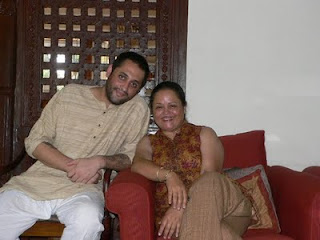
 David and Julian arrived from their ADVENTURE yesterday, two days early, brimming with great stories. I am thrilled that I get two extra days with Julian before he departs for Seattle. I spent 3 days with Rita Thapa, a feminist peace and social activist here in Kathmandu. I had the good fortune to hear of and then meet her through our dear Nepali friend, Sarita, who lives in Seattle. Rita has created two NGO’s in Nepal. TEWA, an organization that fundraises to provide grants to women’s organizations mostly in rural areas of Nepal. The benefits of one small grant are very impressive. $500 trained 15 women in pre-natatal care and midwifery in a district many miles from any health care with only one aging woman to handle birthing needs. This turned around infant and maternal mortality rates. Five years after creating this organization, which has served as a model for Funds for Women all over the world, she transitioned out of leadership.Rita then turned her attention to peace building due to the conflict that Nepal was in at the time. Various military factions were drafting young people at gunpoint to serve and people who were fleeing rural villages to the Kathmandu valley in search of safety. The result has been displacement of many conflict affected youth, and the breakdown of the family and village life as the safety net of rural life. Nagarik Aawaz has created a year-long program for displaced youth from varying geographic areas, ethnic, class and political backgrounds. The team assists healing from the psychological/emotional results of having lived through such trauma.Many of these youth eventually go back to their homes as peace ambassadors, sharing the skills they have developed during the year with Nagarik Aawas. Every Thursday, these young people gather at the Peace Kitchen and cook and serve a meal to Kathmandu’s homeless. As difficult as their life has been, they expressed gratitude for the learning that comes from serving others. During a nonviolent communication workshop I facilitated, one lovely young woman expressed constant fear for her life she experienced as a Maoist, while others spoke of being caught in the crossfire between opposing factions. The sense of compassion for one another they are already learning is very impressive and gives a sense of hope for Nepal’s future. Rita has been able to take intention and vision and deeply held values and with strong organizational skills, she has invited others to join in creating NGOs that are models for the rest of the world. It was a huge gift to share time with her and her family and Edwina, a wonderful young woman and peace activist from Australia who made her way to Nagarik Aawas via Naropa in Boulder, CO.It was farewell to Julian today after a couple of days to sharing stories. Off to Bhutan tomorrow for David and I.
 - Cynthia’s Report on Taulihawa
 It felt like time to leave Kathmandu though it was sad to say farewell
to Deepak and his wonderful family. After a 2-hour wait, we caught our
flight to Bhairhawa, a very short 35-minute flight.
The taxi from the airport to Lumbini dropped us in a very dusty street
next to a “rustic”
Garden Hotel. The room had two single beds, each with a single sheet
and a mosquito coil. In its favor was an attached, though barely
functional bathroom with a non functional shower.
We visited the sacred sites of Lumbini in the afternoon. Much of it
was familiar from our previous visit and some was new. The grounds
were better maintained than I had recalled and it felt less forgotten
than it had on our previous trip.
The following afternoon, having explored the other temples and
monasteries in Lumbini, we climbed aboard a crowded bus to Taulihawa,
the village of David’s Peace Corps experience. At stops along the way,
a few people would get off, but many more would get on. The bus
conductors were hanging on the outside of the bus, making sure no
passengers fell out of the opened doors as we bounced along the narrow
rutted road.
I don’t know if it was our gray hair or our foreign appearance, but
the conductors insisted that David and I have seats. Once seated,
there was no wiggle room and it was necessary to hold ones feet on tip
toe or they were stood on by one of the standing passengers. I had fun
imagining the meaning of the conversations going on around
me. When we peeled out of the bus at our destination, we found a
rickshaw to take us to the home of David’s friend, Dinesh.
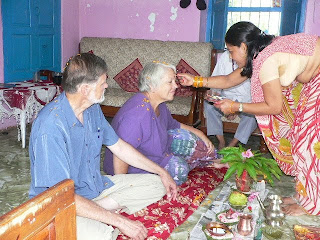
Our stay with Dinesh Gyawali’s family was delightful. We know Sumita,
the eldest daughter because she had lived with us for a few months
when she first arrived in the USA. Her younger brother and sister were
also there since it was holidays for them. It is obvious they are a
close knit family and there was a great deal of joy and celebration.
We were treated like treasured long lost family.
David is truly a celebrity here and everyone has their own stories of
experiences with him that they treasure. It was fun for me to sit back
and be the observer of such rejoicing. Our visit with Julian and
Allison of 14 years ago was recalled with great pleasure and they
wanted to know what each of the kids were doing now. We were shown
many pictures, some framed, taken with our family on that trip.
It has been humbling to spend time here with people living very simple
lives of necessity (and in some instances of choice) and yet
experience the generosity of spirit that expects nothing in return. I
am grateful to have returned here.
It felt like time to leave Kathmandu though it was sad to say farewell
to Deepak and his wonderful family. After a 2-hour wait, we caught our
flight to Bhairhawa, a very short 35-minute flight.
The taxi from the airport to Lumbini dropped us in a very dusty street
next to a “rustic”
Garden Hotel. The room had two single beds, each with a single sheet
and a mosquito coil. In its favor was an attached, though barely
functional bathroom with a non functional shower.
We visited the sacred sites of Lumbini in the afternoon. Much of it
was familiar from our previous visit and some was new. The grounds
were better maintained than I had recalled and it felt less forgotten
than it had on our previous trip.
The following afternoon, having explored the other temples and
monasteries in Lumbini, we climbed aboard a crowded bus to Taulihawa,
the village of David’s Peace Corps experience. At stops along the way,
a few people would get off, but many more would get on. The bus
conductors were hanging on the outside of the bus, making sure no
passengers fell out of the opened doors as we bounced along the narrow
rutted road.
I don’t know if it was our gray hair or our foreign appearance, but
the conductors insisted that David and I have seats. Once seated,
there was no wiggle room and it was necessary to hold ones feet on tip
toe or they were stood on by one of the standing passengers. I had fun
imagining the meaning of the conversations going on around
me. When we peeled out of the bus at our destination, we found a
rickshaw to take us to the home of David’s friend, Dinesh.
Our stay with Dinesh Gyawali’s family was delightful. We know Sumita,
the eldest daughter because she had lived with us for a few months
when she first arrived in the USA. Her younger brother and sister were
also there since it was holidays for them. It is obvious they are a
close knit family and there was a great deal of joy and celebration.
We were treated like treasured long lost family.
David is truly a celebrity here and everyone has their own stories of
experiences with him that they treasure. It was fun for me to sit back
and be the observer of such rejoicing. Our visit with Julian and
Allison of 14 years ago was recalled with great pleasure and they
wanted to know what each of the kids were doing now. We were shown
many pictures, some framed, taken with our family on that trip.
It has been humbling to spend time here with people living very simple
lives of necessity (and in some instances of choice) and yet
experience the generosity of spirit that expects nothing in return. I
am grateful to have returned here. - David’s Report on Taulihawa
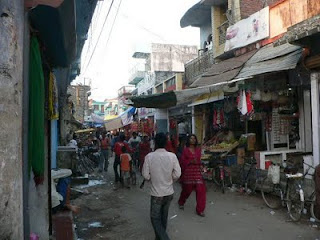
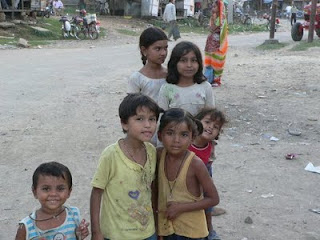 It’s been 38 years since I first came to Taulihawa, assigned here as a
Peace Corps volunteer to teach science and math in the village school.
While there are more people and more buildings and the town has grown
in all directions, it feels not that different from when I first
arrived. The population has grown from about 4,000 to 20,000. I
recognize the main street intersections and temples that have been
here for ages.
As the bus from Lumbini entered town from the east, I spotted the
two-story building that I lived in during my third year here in
Taulihawa. I had two rooms — one I used as a kitchen and bedroom, the
other as a meditation room. The building is currently being used as a
gas station and it looks rather run down.
We hired a rickshaw to take us to the home of my friend Dinesh
Gyawali. The rickshaw driver recognized my friend’s name.
Dinesh, about 5 years younger than me, was a good friend, always
looking for interesting places to take me and people to meet. Now he
is married and has a son and two daughters. His eldest daughter,
Sumita was able to come to the US on a Diversity Visa two years ago.
When I mentioned to Sumita’s grandfather that Sumita was “just like a
daughter” to us, he corrected me, saying, “No, she IS your daughter.”
Sumita returned to Taulihawa for the holidays so the whole family was
together during our visit.
When Dinesh heard that we would be visiting, he decided it was time to
build a bathroom with a Western style toilet and a shower. So when we
arrived, workers were putting the finishing touches on a flush toilet,
a sink and a shower, (all outdoors) which required installation of a
water pump and a water storage tank.
The wiring definitely wouldn’t pass inspection in the U.S. — the
wires to the pump were connected to an extension cord with Scotch
tape, laid over the walkway and threaded through an open window to an
outlet. But it worked. Sort of.
The project was a wonderful gesture of hospitality. I’m just sorry
they had to cut down one of their two coffee bushes to make room for
the bathroom.
Dinesh’s wife Nirmada is a wonderful cook and prepared not only our
morning and evening meals, including different vegetables and chutneys
each meal, but various kinds of tasty snacks in between.
We celebrated the Festival of Lights which involves worshiping Laksmi,
the goddess of wealth and prosperity, setting up electric lights,
candles and butter lamps outside and throughout the house, and
watching groups of singing and dancing children who go door to door
offering blessings and collecting money.
We’ve been visiting lots of friends around town, having tea and snacks
at the homes of former teachers at Buddha Padma High School, and some
of my former students, most of whom have children of their own.
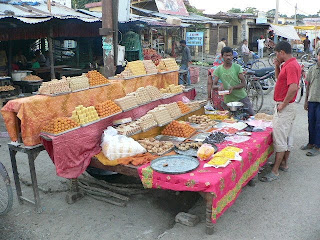
I thought I was going to wander about the market to take some pictures
one afternoon, but there are so many people here who remember me, and
want to visit, it became a sequence of invitations to come have tea in
people’s homes. We already have more invitations for dinner than we
will ever be able to accept.
Former students still remember some of the science demonstrations and
experiments we did in the classroom– the sodium metal in the pan of
water which sizzled and hissed as it skimmed across the surface,
vigorously producing hydrogen gas until the gas ignited with a loud
bang; the human skull we had found by the riverside– apparently it
still peers out of the display cabinet.
Today we have moved to the home of Gopal Bahadur Singh which is where
I lived during the first two years of my stint as a Peace Corps
volunteer. Back then the home was occupied by an extended family that
included Gopal and his wife, their five children, both parents, and
two or three other relatives. Now the children have their own families
and have moved away. The parents have passed away, so now only Gopal
and his wife live here, along with a servant woman and her son.
We continue joining in the holiday festivities by going to the home of
a family member and Bhai Tikka where everyone blesses everyone else by
putting a dab of red color on each person’s forehead.
We’ll leave for Delhi on Wednesday (10/21) and start planning the
remainder of our trip.
It’s been 38 years since I first came to Taulihawa, assigned here as a
Peace Corps volunteer to teach science and math in the village school.
While there are more people and more buildings and the town has grown
in all directions, it feels not that different from when I first
arrived. The population has grown from about 4,000 to 20,000. I
recognize the main street intersections and temples that have been
here for ages.
As the bus from Lumbini entered town from the east, I spotted the
two-story building that I lived in during my third year here in
Taulihawa. I had two rooms — one I used as a kitchen and bedroom, the
other as a meditation room. The building is currently being used as a
gas station and it looks rather run down.
We hired a rickshaw to take us to the home of my friend Dinesh
Gyawali. The rickshaw driver recognized my friend’s name.
Dinesh, about 5 years younger than me, was a good friend, always
looking for interesting places to take me and people to meet. Now he
is married and has a son and two daughters. His eldest daughter,
Sumita was able to come to the US on a Diversity Visa two years ago.
When I mentioned to Sumita’s grandfather that Sumita was “just like a
daughter” to us, he corrected me, saying, “No, she IS your daughter.”
Sumita returned to Taulihawa for the holidays so the whole family was
together during our visit.
When Dinesh heard that we would be visiting, he decided it was time to
build a bathroom with a Western style toilet and a shower. So when we
arrived, workers were putting the finishing touches on a flush toilet,
a sink and a shower, (all outdoors) which required installation of a
water pump and a water storage tank.
The wiring definitely wouldn’t pass inspection in the U.S. — the
wires to the pump were connected to an extension cord with Scotch
tape, laid over the walkway and threaded through an open window to an
outlet. But it worked. Sort of.
The project was a wonderful gesture of hospitality. I’m just sorry
they had to cut down one of their two coffee bushes to make room for
the bathroom.
Dinesh’s wife Nirmada is a wonderful cook and prepared not only our
morning and evening meals, including different vegetables and chutneys
each meal, but various kinds of tasty snacks in between.
We celebrated the Festival of Lights which involves worshiping Laksmi,
the goddess of wealth and prosperity, setting up electric lights,
candles and butter lamps outside and throughout the house, and
watching groups of singing and dancing children who go door to door
offering blessings and collecting money.
We’ve been visiting lots of friends around town, having tea and snacks
at the homes of former teachers at Buddha Padma High School, and some
of my former students, most of whom have children of their own.
I thought I was going to wander about the market to take some pictures
one afternoon, but there are so many people here who remember me, and
want to visit, it became a sequence of invitations to come have tea in
people’s homes. We already have more invitations for dinner than we
will ever be able to accept.
Former students still remember some of the science demonstrations and
experiments we did in the classroom– the sodium metal in the pan of
water which sizzled and hissed as it skimmed across the surface,
vigorously producing hydrogen gas until the gas ignited with a loud
bang; the human skull we had found by the riverside– apparently it
still peers out of the display cabinet.
Today we have moved to the home of Gopal Bahadur Singh which is where
I lived during the first two years of my stint as a Peace Corps
volunteer. Back then the home was occupied by an extended family that
included Gopal and his wife, their five children, both parents, and
two or three other relatives. Now the children have their own families
and have moved away. The parents have passed away, so now only Gopal
and his wife live here, along with a servant woman and her son.
We continue joining in the holiday festivities by going to the home of
a family member and Bhai Tikka where everyone blesses everyone else by
putting a dab of red color on each person’s forehead.
We’ll leave for Delhi on Wednesday (10/21) and start planning the
remainder of our trip. - Personal Encounters in Nepal
 Encounters with people along the trail in Western Nepal
We come across a middle aged Nepali couple in the Humla District. The
woman has a large goiter on her neck. I wonder whether they were
heading down to Simikot to get some medical attention. I know that
goiters are due to an iodine deficiency. In my pack I have a bottle of
iodine tablets, as a backup for water purification, in case our
Steri-Pen stopped working. Should I offer this woman some iodine
tablets? I have no idea what the proper course of treatment is for
goiters– what form of iodine, what dosage, how frequently, for how
many months. Would it do more harm than good by giving her some iodine
tablets? I don’t know, so I do nothing and we continue on our way.
Another man stops to talk with our guide, Lal Bahadur. He describes an
ailment where some kind of black substance came up from his stomach.
He asks us whether we have any medicine for this. I have no idea what
this might be. I’m pretty sure we don’t have anything to help. We
continue on our way.
A man stops us, complaining of a headache. Do we have any medicine
that would help? I think Julian has some ibuprofin tucked away in his
medical kit. Maybe it would give the man some relief. Maybe not. We
keep walking.
We come across a group of about 20 people working on road
construction. One of them holds out his hand and asks for “money”.
Another chimes in, “money!” With extended hand. A group of three women
step in front of us, blocking our path. “Money!, money!” They shout.
I continue walking forward, between two of the women. One woman grabs
my walking stick and tries to wrest it from my hand. I hang onto it
more tightly and continue walking forward. I glance at one of the
other men in the group, who simply shakes his head, as if to say,
“Just ignore those women.” I continue walking, realizing that I have
become just a bit upset with this incident.
We arrive in Hilsa and wait at the police station for word about the
whereabouts of our passports. A man has been sorting beans on a flat
wicker basket. He picks out two beans, one white and one black and
comes over to talk with us. He indicates that one of his teeth is
black, like the black bean, and it hurts very much. Is there anything
we can do about it?
Probably an abscess; probably a tooth that needs to be extracted.
Julian points out that we have some dental floss with us– perhaps we
could tie it around his abscessed tooth and give it a good yank. Well,
it’s a nice idea, but we say there’s nothing we can do. Sorry.
Encounter with a family in Taulihawa
We’re visiting a family I have known for many years. The nephew of a
friend of mine, about 10 years old, has been complaining of a fever
and constant pain in one of his teeth. He opens his mouth to show me
the tooth, and sure enough it has a brownish color. Definitely
something that calls for a trip to the dentist.
The boy has been told that he will be taken to a dentist soon , but
the trip keeps getting postponed. We suspect that the delay is due to
financial reasons. After a few days, there is less pain and the tooth
seems to be getting better. Is it really healing on its own, or has
the decay advanced to the point where the nerve is dying. I suspect
the latter. Will he be taken to a dentist? I doubt it. The nearest
dentist is a day away.
The boy lives with his mother and grandfather; his father committed
suicide a few years back. The grandfather is financially well off, but
extremely tight with money. Also, he has a long history of being
abusive to his sons. After the death of his first son, the grandfather
built a wall to divide the house into two haves. His one surviving
son, the boy’s uncle and his family have been banished from the
grandfather’s side of the house and the grandfather hasn’t spoken
with them for years.
Obviously there is complicated set of relationships going on here.
Intervening on behalf of the nephew with the toothache could really
set off some sparks. But the fact remains that the boy really does
need to see a dentist.
Just before we leave, I put some cash in an envelope and give it to
the boy’s uncle, explaining that this is to pay for a trip to the
dentist. First, he is hesitant to take it, saying that the grandfather
has money and is able to pay. But after we discuss it a few minutes,
he agrees to take the money and see what can be done.
I have no idea whether this will actually benefit the nephew or not.
But it seems worth the risk.
Encounters with people along the trail in Western Nepal
We come across a middle aged Nepali couple in the Humla District. The
woman has a large goiter on her neck. I wonder whether they were
heading down to Simikot to get some medical attention. I know that
goiters are due to an iodine deficiency. In my pack I have a bottle of
iodine tablets, as a backup for water purification, in case our
Steri-Pen stopped working. Should I offer this woman some iodine
tablets? I have no idea what the proper course of treatment is for
goiters– what form of iodine, what dosage, how frequently, for how
many months. Would it do more harm than good by giving her some iodine
tablets? I don’t know, so I do nothing and we continue on our way.
Another man stops to talk with our guide, Lal Bahadur. He describes an
ailment where some kind of black substance came up from his stomach.
He asks us whether we have any medicine for this. I have no idea what
this might be. I’m pretty sure we don’t have anything to help. We
continue on our way.
A man stops us, complaining of a headache. Do we have any medicine
that would help? I think Julian has some ibuprofin tucked away in his
medical kit. Maybe it would give the man some relief. Maybe not. We
keep walking.
We come across a group of about 20 people working on road
construction. One of them holds out his hand and asks for “money”.
Another chimes in, “money!” With extended hand. A group of three women
step in front of us, blocking our path. “Money!, money!” They shout.
I continue walking forward, between two of the women. One woman grabs
my walking stick and tries to wrest it from my hand. I hang onto it
more tightly and continue walking forward. I glance at one of the
other men in the group, who simply shakes his head, as if to say,
“Just ignore those women.” I continue walking, realizing that I have
become just a bit upset with this incident.
We arrive in Hilsa and wait at the police station for word about the
whereabouts of our passports. A man has been sorting beans on a flat
wicker basket. He picks out two beans, one white and one black and
comes over to talk with us. He indicates that one of his teeth is
black, like the black bean, and it hurts very much. Is there anything
we can do about it?
Probably an abscess; probably a tooth that needs to be extracted.
Julian points out that we have some dental floss with us– perhaps we
could tie it around his abscessed tooth and give it a good yank. Well,
it’s a nice idea, but we say there’s nothing we can do. Sorry.
Encounter with a family in Taulihawa
We’re visiting a family I have known for many years. The nephew of a
friend of mine, about 10 years old, has been complaining of a fever
and constant pain in one of his teeth. He opens his mouth to show me
the tooth, and sure enough it has a brownish color. Definitely
something that calls for a trip to the dentist.
The boy has been told that he will be taken to a dentist soon , but
the trip keeps getting postponed. We suspect that the delay is due to
financial reasons. After a few days, there is less pain and the tooth
seems to be getting better. Is it really healing on its own, or has
the decay advanced to the point where the nerve is dying. I suspect
the latter. Will he be taken to a dentist? I doubt it. The nearest
dentist is a day away.
The boy lives with his mother and grandfather; his father committed
suicide a few years back. The grandfather is financially well off, but
extremely tight with money. Also, he has a long history of being
abusive to his sons. After the death of his first son, the grandfather
built a wall to divide the house into two haves. His one surviving
son, the boy’s uncle and his family have been banished from the
grandfather’s side of the house and the grandfather hasn’t spoken
with them for years.
Obviously there is complicated set of relationships going on here.
Intervening on behalf of the nephew with the toothache could really
set off some sparks. But the fact remains that the boy really does
need to see a dentist.
Just before we leave, I put some cash in an envelope and give it to
the boy’s uncle, explaining that this is to pay for a trip to the
dentist. First, he is hesitant to take it, saying that the grandfather
has money and is able to pay. But after we discuss it a few minutes,
he agrees to take the money and see what can be done.
I have no idea whether this will actually benefit the nephew or not.
But it seems worth the risk. - Lumbini
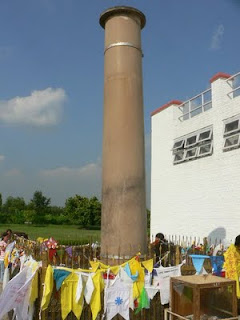
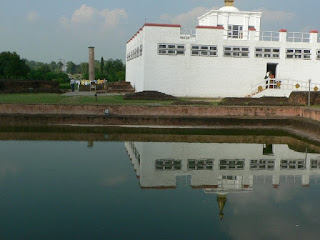 Lumbini was identified in the late 1800’s as the birthplace of Buddha
and now there is strong archaeological evidence to support this. There
are also many nearby sites that are important to understanding the
life and teaching of Gautama Buddha. Most have not yet been
investigated by archaeologists.
The key points of interest at Lumbini are the Asoka pillar, the
Mayadevi Temple, the Sacred Pond and several Buddhist temples.
In the third century BCE, Emperor Asoka was a great and powerful king
who ruled all of north India. After a devastating battle at Kalinga,
he became a strong proponent of Buddhism and over the years, went on
several pilgrimages to visit Buddhist sacred sites. His patronage was
a strong stimulus to the spread of Buddhism.
In 269 BCE, he visited the birthplace of the Buddha and erected a
stone pillar to mark the site. He had the following words inscribed:
“King Piyadasi [Asoka] the beloved of Devas in the twentieth year of
the coronation himself made a royal visit; Buddha Sakyamuni having
been born here, a stone railing was built and a stone pillar erected.
The Bhagavan having been born here, Lumbini Village was tax-reduced
and entitled to the eighth part only”.
The inscription was in the Brahmi language. For many years, the
commonly accepted translation of one phrase was “stone railing”, even
though there was no evidence of a railing. However, in 1996, after
careful excavation of the Mahadevi Temple, an important discovery was
made– a special marker stone was unearthed at the base of the temple
which marks the exact spot at which the Buddha was born. Now the
consensus seems to be that the phrase was actually referring to the
marker stone, not a railing.
The Mayadevi Temple also contains a stone Nativity Scene of Lord
Buddha’s birth. Exposed for hundreds of years, the Nativity Scene has
been worn smooth by being touched by innumerable pilgrims and
worshipers. Today the temple is surrounded by a new building that
protects the temple excavation and the nativity scene has been raised
up to be out of reach of passersby.. The recently discovered Marker
Stone is protected by a glass enclosure.
According to legend, the Sacred Pond is where Mayadevi took a bath
just before giving birth.
In 1978, a master plan was completed for the development of Lumbini.
It set aside areas for the construction of temples by governments and
Buddhist organizations. A few temples have been completed, but most
are still under construction or postponed. It appears that development
has been hampered by the lack of roads, bridges and other
infrastructure. There is potential for large and beautiful gardens
once construction is completed.
It had been fourteen years since we had visited Lumbini with our
children and we saw many changes. We were also struck by how much
additional work must be done to make this place attractive for
pilgrims.
Among the best sources of information are the two books written by the
archaeologist, Basanta Bidari: Lumbini: A haven of Sacred Refuge
(2002) and Kapilavastu: The World of Siddhartha (2007). Much of the
information in our blog posts about Lumbini and Kapilavastu come from
Mr. Bidari’s two books.
Lumbini was identified in the late 1800’s as the birthplace of Buddha
and now there is strong archaeological evidence to support this. There
are also many nearby sites that are important to understanding the
life and teaching of Gautama Buddha. Most have not yet been
investigated by archaeologists.
The key points of interest at Lumbini are the Asoka pillar, the
Mayadevi Temple, the Sacred Pond and several Buddhist temples.
In the third century BCE, Emperor Asoka was a great and powerful king
who ruled all of north India. After a devastating battle at Kalinga,
he became a strong proponent of Buddhism and over the years, went on
several pilgrimages to visit Buddhist sacred sites. His patronage was
a strong stimulus to the spread of Buddhism.
In 269 BCE, he visited the birthplace of the Buddha and erected a
stone pillar to mark the site. He had the following words inscribed:
“King Piyadasi [Asoka] the beloved of Devas in the twentieth year of
the coronation himself made a royal visit; Buddha Sakyamuni having
been born here, a stone railing was built and a stone pillar erected.
The Bhagavan having been born here, Lumbini Village was tax-reduced
and entitled to the eighth part only”.
The inscription was in the Brahmi language. For many years, the
commonly accepted translation of one phrase was “stone railing”, even
though there was no evidence of a railing. However, in 1996, after
careful excavation of the Mahadevi Temple, an important discovery was
made– a special marker stone was unearthed at the base of the temple
which marks the exact spot at which the Buddha was born. Now the
consensus seems to be that the phrase was actually referring to the
marker stone, not a railing.
The Mayadevi Temple also contains a stone Nativity Scene of Lord
Buddha’s birth. Exposed for hundreds of years, the Nativity Scene has
been worn smooth by being touched by innumerable pilgrims and
worshipers. Today the temple is surrounded by a new building that
protects the temple excavation and the nativity scene has been raised
up to be out of reach of passersby.. The recently discovered Marker
Stone is protected by a glass enclosure.
According to legend, the Sacred Pond is where Mayadevi took a bath
just before giving birth.
In 1978, a master plan was completed for the development of Lumbini.
It set aside areas for the construction of temples by governments and
Buddhist organizations. A few temples have been completed, but most
are still under construction or postponed. It appears that development
has been hampered by the lack of roads, bridges and other
infrastructure. There is potential for large and beautiful gardens
once construction is completed.
It had been fourteen years since we had visited Lumbini with our
children and we saw many changes. We were also struck by how much
additional work must be done to make this place attractive for
pilgrims.
Among the best sources of information are the two books written by the
archaeologist, Basanta Bidari: Lumbini: A haven of Sacred Refuge
(2002) and Kapilavastu: The World of Siddhartha (2007). Much of the
information in our blog posts about Lumbini and Kapilavastu come from
Mr. Bidari’s two books. - Kapilavastu
 Kapilavastu is a district in southwestern Nepal in which there was a
kingdom ruled by the Sakya dynasty during the 8th century BCE.
Kapilavastu gets its name from the sage Kapila whose hermitage was
here.
The Sakyas were a people who had settled in a forest of saka trees
south of Himalayas and between the Rohini and Rapti rivers. They grew
rice and raised cattle. The Sakya community consisted of stoneworkers,
iron smiths, woodworkers, weavers and potters. They built a city and
called it Kapilavastu.
In the early 7th century BCE, Kapilavastu was ruled by King
Suddhodana. A neighboring kingdom, Devadaha bordered Kapilavastu on
the east. Matrimonial relations developed between the Koliya royal
family in Devadaha and the Sakyas.
In 575 BCE, King Suddhodana married two sisters Mahadevi and Prajapati
from Devadaha.
Twelve years later a child was born who was to become the Buddha. His
name at birth was Siddhartha. Gautama was the name of his clan. He was
born on the full moon day of the month of Vaisakha in 563 BCE.
He lived in his father’s palace in Kapilavastu. According to legend,
his father went to great lengths to provide a pleasant home
environment for his son and went to great lengths to insulate him from
the misfortunes of life.
Archeological excavations at Tilaurakot, the site of Suddhodana’s
palace have unearthed hundreds of coins, pieces of pottery,
terra-cotta figurines, and stone and metal tools, beads and bangles.
Some of these objects have been dated from the 6th century BCE to the
2nd century CE.
At the age of 16, Siddhartha was married to Yasodhara of Devadaha.
After twelve years of marriage, the bore a son, Rahula.
At the age of 29, Siddhartha Gautama renounced his life as prince,
husband and father, and resolved to discover the key to freedom from
human suffering. He left the palace one night, shaved his head and
became an ascetic.
Six years later, after attaining enlightenment, he began his teaching
career of 45 years.
Soon after his enlightenment at Bodh Gaya, the Buddha, also known as
Sakyamuni returned briefly to Kapilavastu to see his father, his aunt
who had raised him, his wife, and his son.
A place called Kudan is where the Buddha first greeted his father. It
is about 4km south of Tilaurakot. At this time, the Buddha already had
a few hundred monks who accompanied him. To provide a place for them
to practice with their teacher, King Suddhodana built a monastery at
Kudan.
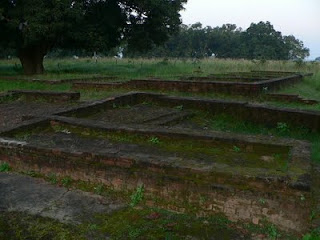
Today there are several mounds of bricks here, but their age is
uncertain. They may be ruins of temples or monasteries built later. In
1962, the site was partially excavated, but items found that could be
accurately dated were no older than the 9th century CE. Further
archaeological work will be required to ascertain the history of this
site.
In 483 BCE, at Kusinagar the Buddha passed away.
Within a couple hundred years of the Sakyamuni Buddha, the idea of
previous Buddha’s began to appear. By the time of king Asoka (3rd
century BCE), many believed that there had been other human Buddhas
before Sakyamuni.
According to both Hinayana and Mahayana teachings, Sakyamuni was
preceded by Krakuchhanda, Kanakamuni and Kasyapa. These are referred
to as Manusi (human) Buddhas. Interestingly, both Krakuchhanda and
Kanakamuni were born and attained enlightenment within 5 miles of
Tilaurakot.
The story of Krakuchhanda told by a renowned Buddhist scholar of
Srilanka, Malalasekera (1983) seems to me to be more apocryphal than
historical, telling that Krakuchhanda stood forty cubits tall, and
died at an age of forty thousand years. According to the story, he
practiced austerities for only eight months, and attained
enlightenment while sitting under a sirisa tree.
During his pilgrimage, King Asoka marked the site of Krakuchhanda’s
enlightenment by erecting a stone pillar at Gotihawa, just 3km west of
Kudan.
Scholar Malalasekera (1983) describes another Manusi Buddha,
Kanakamuni who ostensibly came after Krakuchhandu but before
Sakyamuni. The story tell us that he was 30 cubits tall and lived for
thirty thousand years. Apparently he attained enlightenment while
sitting under an Udumbara tree.
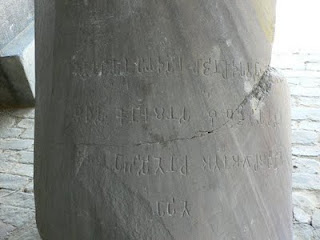
King Asoka identified a site where Kanakamuni attained enlightenment
at Niglihawa, about 5km northeast of Tilauakot. He erected a stone
pillar there and inscribed it in the Brahmi script and the Pali
language. Translated by V. Smith, the inscription says,
“His Majesty King Priyadarsina [Asoka]in the 14th year of this reign
enlarged for the second time the stupa of the Buddha Kanakamuni and in
the 20th year of his reign, having come in person, did reverence and
set up a stone pillar.”
Today the pillar is broken into pieces, two of which can be seen at
Niglihawa. The inscription is clearly visible.
In recent times, this pillar was discovered in 1893 by a Nepalese
officer on a hunting expedition.
Kapilavastu is a district in southwestern Nepal in which there was a
kingdom ruled by the Sakya dynasty during the 8th century BCE.
Kapilavastu gets its name from the sage Kapila whose hermitage was
here.
The Sakyas were a people who had settled in a forest of saka trees
south of Himalayas and between the Rohini and Rapti rivers. They grew
rice and raised cattle. The Sakya community consisted of stoneworkers,
iron smiths, woodworkers, weavers and potters. They built a city and
called it Kapilavastu.
In the early 7th century BCE, Kapilavastu was ruled by King
Suddhodana. A neighboring kingdom, Devadaha bordered Kapilavastu on
the east. Matrimonial relations developed between the Koliya royal
family in Devadaha and the Sakyas.
In 575 BCE, King Suddhodana married two sisters Mahadevi and Prajapati
from Devadaha.
Twelve years later a child was born who was to become the Buddha. His
name at birth was Siddhartha. Gautama was the name of his clan. He was
born on the full moon day of the month of Vaisakha in 563 BCE.
He lived in his father’s palace in Kapilavastu. According to legend,
his father went to great lengths to provide a pleasant home
environment for his son and went to great lengths to insulate him from
the misfortunes of life.
Archeological excavations at Tilaurakot, the site of Suddhodana’s
palace have unearthed hundreds of coins, pieces of pottery,
terra-cotta figurines, and stone and metal tools, beads and bangles.
Some of these objects have been dated from the 6th century BCE to the
2nd century CE.
At the age of 16, Siddhartha was married to Yasodhara of Devadaha.
After twelve years of marriage, the bore a son, Rahula.
At the age of 29, Siddhartha Gautama renounced his life as prince,
husband and father, and resolved to discover the key to freedom from
human suffering. He left the palace one night, shaved his head and
became an ascetic.
Six years later, after attaining enlightenment, he began his teaching
career of 45 years.
Soon after his enlightenment at Bodh Gaya, the Buddha, also known as
Sakyamuni returned briefly to Kapilavastu to see his father, his aunt
who had raised him, his wife, and his son.
A place called Kudan is where the Buddha first greeted his father. It
is about 4km south of Tilaurakot. At this time, the Buddha already had
a few hundred monks who accompanied him. To provide a place for them
to practice with their teacher, King Suddhodana built a monastery at
Kudan.
Today there are several mounds of bricks here, but their age is
uncertain. They may be ruins of temples or monasteries built later. In
1962, the site was partially excavated, but items found that could be
accurately dated were no older than the 9th century CE. Further
archaeological work will be required to ascertain the history of this
site.
In 483 BCE, at Kusinagar the Buddha passed away.
Within a couple hundred years of the Sakyamuni Buddha, the idea of
previous Buddha’s began to appear. By the time of king Asoka (3rd
century BCE), many believed that there had been other human Buddhas
before Sakyamuni.
According to both Hinayana and Mahayana teachings, Sakyamuni was
preceded by Krakuchhanda, Kanakamuni and Kasyapa. These are referred
to as Manusi (human) Buddhas. Interestingly, both Krakuchhanda and
Kanakamuni were born and attained enlightenment within 5 miles of
Tilaurakot.
The story of Krakuchhanda told by a renowned Buddhist scholar of
Srilanka, Malalasekera (1983) seems to me to be more apocryphal than
historical, telling that Krakuchhanda stood forty cubits tall, and
died at an age of forty thousand years. According to the story, he
practiced austerities for only eight months, and attained
enlightenment while sitting under a sirisa tree.
During his pilgrimage, King Asoka marked the site of Krakuchhanda’s
enlightenment by erecting a stone pillar at Gotihawa, just 3km west of
Kudan.
Scholar Malalasekera (1983) describes another Manusi Buddha,
Kanakamuni who ostensibly came after Krakuchhandu but before
Sakyamuni. The story tell us that he was 30 cubits tall and lived for
thirty thousand years. Apparently he attained enlightenment while
sitting under an Udumbara tree.
King Asoka identified a site where Kanakamuni attained enlightenment
at Niglihawa, about 5km northeast of Tilauakot. He erected a stone
pillar there and inscribed it in the Brahmi script and the Pali
language. Translated by V. Smith, the inscription says,
“His Majesty King Priyadarsina [Asoka]in the 14th year of this reign
enlarged for the second time the stupa of the Buddha Kanakamuni and in
the 20th year of his reign, having come in person, did reverence and
set up a stone pillar.”
Today the pillar is broken into pieces, two of which can be seen at
Niglihawa. The inscription is clearly visible.
In recent times, this pillar was discovered in 1893 by a Nepalese
officer on a hunting expedition. - Slideshow of Taulihawa and nearby Buddhist sitesSlideshows for Taulihawa, where we visited friends and joined in celebration of Tihar, and Lumbini, Kapilavastu and other Buddhist sites are at: Taulihawa http://www.flickr.com/photos/11790404@N02/sets/72157622519956599/show/ Lumbini http://www.flickr.com/photos/11790404@N02/sets/72157622519998463/show/ Kapilavastu http://www.flickr.com/photos/11790404@N02/sets/72157622520033869/show/ Kusinagara http://www.flickr.com/photos/11790404@N02/sets/72157622520043169/show/
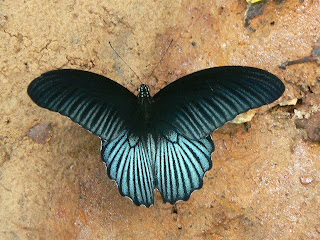
- From Nepal to Cambodia

 The morning we left Nepal we had quite a number of people seeing us off, including Sumita’s family and friends who stopped the bus and climbed aboard for one last photo opportunity. It was a very touching farewell after our time in Nepal.A couple hours on a very crowded bus brought us to a border town in Nepal where we decided to travel open air on a rickshaw the few kilometers to the actual border checkpoints. With quick crossings out of Nepal and into India, we boarded yet another very crowded bus headed to the major train transportation hub, Gorakhpur.We had a challenging time with the pushiness and the constant grasping that we experienced as soon as we arrived in India. It felt like we were being hustled at every turn. I see it in the way they drive, doing anything to edge out other vehicles. We had a driver who terrified us and risked the lives of many other people and then asked us for a tip beyond an already exorbitant price. We were told that they thought of us as their “mother and father” and “I am your friend” unlike everyone else in Delhi, all the while asking for more and more. Although we slept fairly well on the overnight train to Delhi, exhaustion led us to a pretty basic hotel in a questionable area of town. We did have warm water one of the days we were there and occasionally even toilet paper. There was one quite sweet young man who made sure we had breakfast each day. Maybe in crowds they live in, aggression is a means of survival.David and I have just finished reading Freedom in Exile by the Dalai Lama. The Indians provided him and thousands of refugees with land and a home and the possibility of creating community. I think, possibly, my experience coming after such a generous experience in Nepal and nearing the end of a lengthy period of travel overwhelmed me. Nonetheless, the result was that we left India as quickly as possible and arrived in Siem Reap, Cambodia after a two hour stop in Bangkok, hence our jet setting blitz of 4 countries in 5 days.We stayed in a lovely small garden guesthouse, our room surrounded by windows all looking out at huge tropical plants, with what we came to call dog frogs (frogs whose croak sounded just like dogs) serenading us each evening as we fell asleep. In spite of a nightmarish history, we found the Cambodian people to be gentle, and soft spoken and welcoming in every way which actually left us wanting to give more to them. We have learned of a number of non-profits doing everything from offering stability and education to street children to butterfly projects trying to create sustainable income to a landmine removal effort also supporting an orphange for children maimed by landmines (6 million remain buried in the countryside).We enjoyed our visits to temples in the Angkor area, many of which have been there for up to a thousand years. They are generally built of sandstone with beautiful intricate carvings. Many are being overtaken by the plants and trees of the surrounding tropical environment. Much effort is going into stabilizing and restoring them. We arrived just on the cusp of the real tourist season starting so the crowds weren’t too think and we were able to take our time and soak up the unique atmosphere here.We enjoyed a Cambodian cooking class and may subject some of our friends. The Khmer food is very subtly flavored with wonderful fresh ingedients which we are hoping to search out when we return home. We also visited a silk farm and saw the whole process from worm to beautifully woven fabric. This group is working to train artisans in the traditional arts of Cambodia.We had the same tuk-tuk driver during our stay and he shared with us his experience of volunteering to help encourage the child beggers to get off the streets which has become an amazing successful project. One Australian woman read an article in a newpaper and on her way home from work, she stopped and booked a ticket to Cambodia. She found the work she was called to do which has led to the empowerment of countless children and their families. One never knows where one drop might reach.I was very sad to leave Cambodia this morning and I hold onto the possibility of returning. For now I will work at finding a way to enjoy Thailand for the next 3 weeks.


