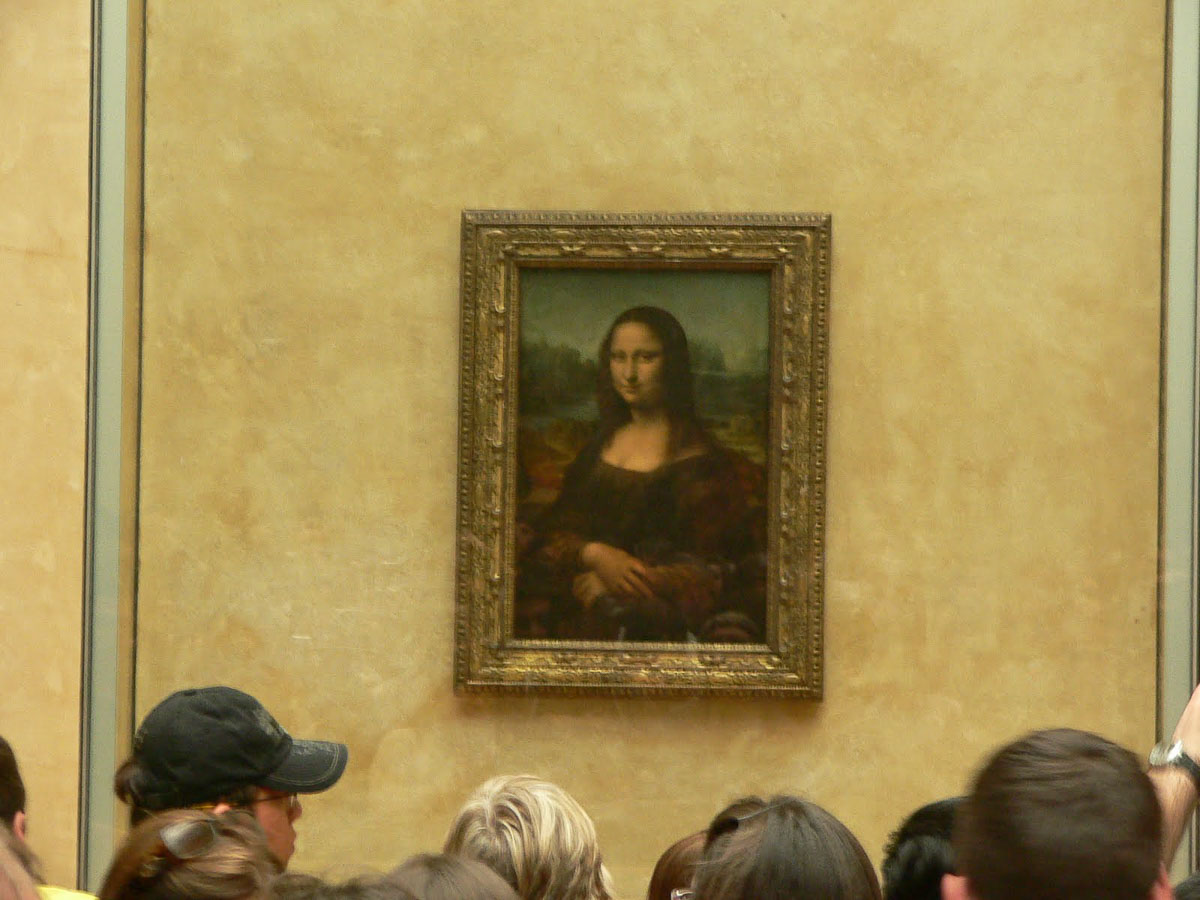
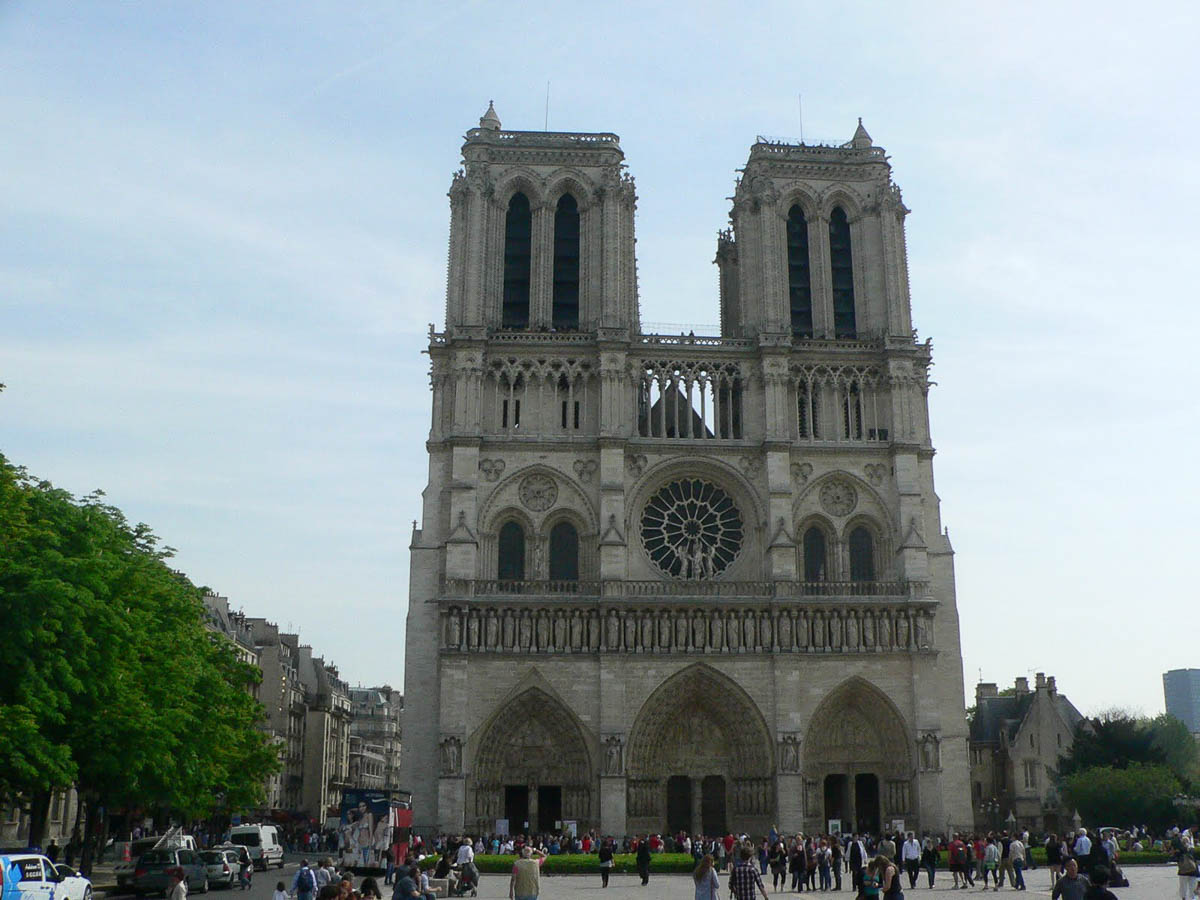
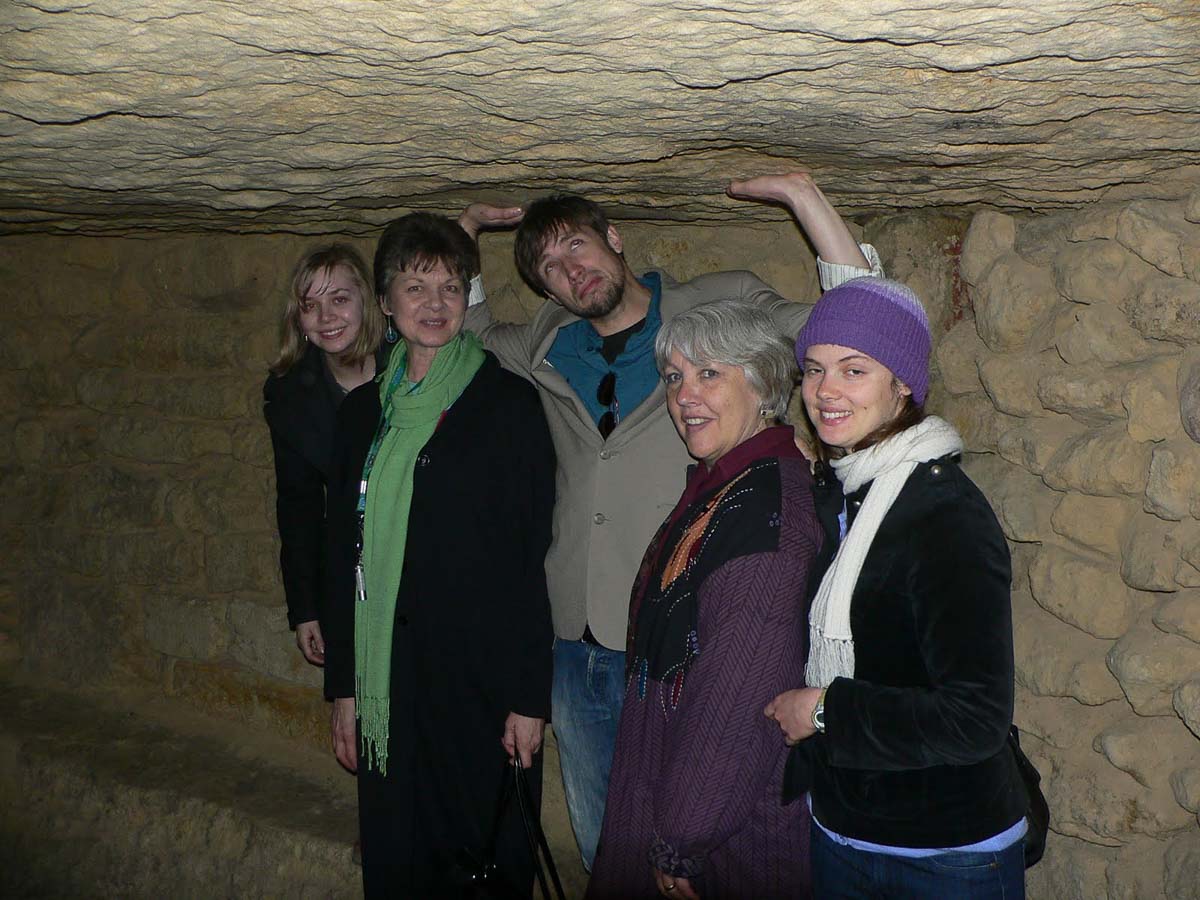
Forsythia blooming for Cynthia.
Saint-Chapelle  According to our brochure, Saint-Chapelle was built between 1242 and 1248, in accordance with the wishes of king Louis IX. It housed relics of the Passion of Christ, including the Crown of Thorns, acquired in 1239 for a sum that greatly exceeded the cost of building the chapel itself.
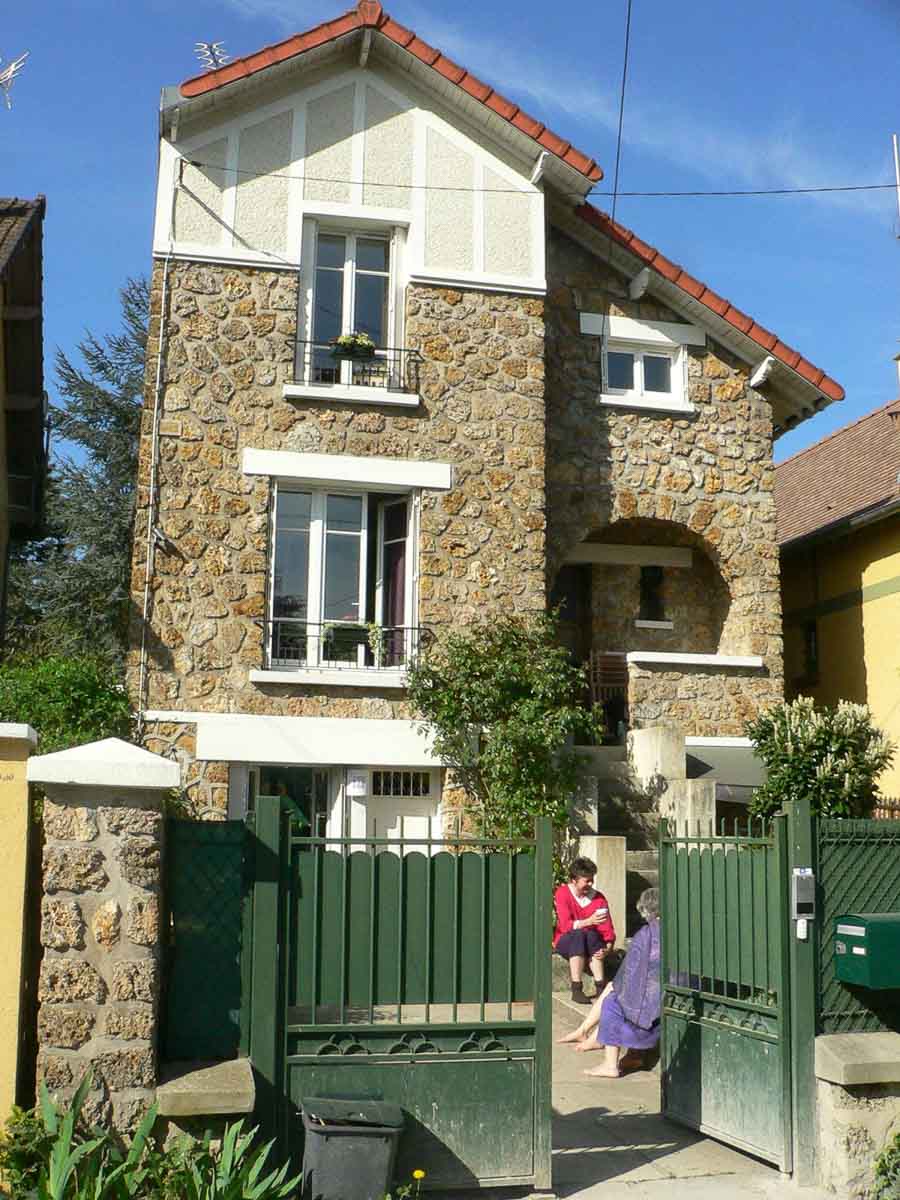 What a great opportunity to go to France! Sarah knows Paris, and a family in which she teaches English has offered their home for a week in Bouvigal, just outside Paris. More photos of Bouvigal

We are happy we connected with our Whidbey Island friend, Todd, in
Ayuthaya. As we are nearing the end of our journey, he was beginning
his. It was lovely to have this intersection for an afternoon, after
which we boarded a night bus for Chiang Mai in North Central Thailand.
Though we were on a luxury bus with reclining seats, a good night’s
sleep still eluded us.
We arrived in Chiang Mai grateful to have booked a room in Riverside
House, a small quiet bed and breakfast with a lovely garden. We were
about 15 minutes walk from the center and right on the river which
runs through the city.
After spending a quiet first day, we set out to explore. Chiang Mai is
absolutely loaded with temples and monasteries. I don’t think you can
walk more than two blocks in any direction without finding at least
one and often more. I was quite amused to come across one that had a
large Donald Duck among all the other animals staged in its garden. It
has surprised me to see a fair bit of kitschy stuff amongst the
buddhas. Plaster and plastic figures and plastic flowers abound in all
of Asia.
One of our must do’s was a Prison Massage. We read in our guidebook
that the women’s prison trained inmates about 6 months before release
in a number of skills. One of these skills is Thai massage. Upon
reaching a level of skill, they are able to work in the prison massage
shop and the money collected is saved for their release. We had great
massages and were put in some positions we hadn’t experienced before!
Once again, we felt great about where our tourist dollars were going
and that these women would leave prison with a way to earn a
livelihood.
The following day, we both took a Thai cooking class at an organic
farm in the countryside. We first had a brief visit to a market where
we were introduced to about 20 different kinds of rice.
At the farm, we found all the fresh ingredients that we would pound
into our green, red or yellow curry paste. Most of these ingredients
grow year-round in Thailand which gives the food it’s wonderful
freshness. Our teacher was a very charming and humorous Thai man, who,
while showing us traditional methods and ingredients, offered
encouragement to modify his recipes and make the food our own way with
the ingredients available to us when we returned home. David and I are
looking forward to giving it a try.


Ayuthaya is a city about 45 minutes north of Bangkok. It was the royal
capital of Siam from 1350 to 1767, before Thailand was established
with its capital at Bangkok.
We spent three days there visiting some of the sights, including ruins
of temples (called Wats) and monuments. Most of these were built in
14th and 15th centuries and show both Hindu and Buddhist influences.
They are reminiscent of Angkor Wat in Cambodia.
What struck me is how many of these temples seem to have been built by
kings to accrue merit or for their own glorification. Several
monuments were built in recognition of victories in subduing other
peoples in warfare.
In fact, it seemed a bit incongruous to see so many statues of the
Buddha in places designed to honor persons with big egos and
questionable achievements.
Maybe we have just visited too many Buddhist temples on this trip. But
it also brings up questions I have about the interrelated concepts of
merit, karma, rebirth and reincarnation.
The idea of doing “holy” acts in order to build up one’s own store of
merit, with the idea that it will somehow help oneself after death
seems to me misguided. It’s the same disillusionment I felt growing up
with the idea that through good works, people can better their chances
of going to heaven rather than going to hell. Except in a metaphorical
sense, I just don’t buy it.
And then there are the concepts of karma and rebirth that I really
cannot get my mind around. I just don’t believe that any kind of
individual personality or identity persists after death, except among
the people who remember you. Don’t we have a responsibility to
recognize when we are engaged in wishful thinking and set this aside?
My own experience resonates much more closely with the Buddha’s
teaching of anatta– that there really is no “self” there. It seems
very simple and true. Why complicate it with endless conceptual webs
of “good” and “bad” karma, karmic connections, rebirth and
reincarnation? To me it just feels better to drop all that.
As an alternative to visiting lots of Buddhist temples in Thailand, I
decided to pick up a copy of the book, “Monk in the Mountain: Simple
lessons you can use from a Western Buddhist monk,” by Ajahn Sumano
Bhikkhu.
Sumano Bhikkhu was born in Chicago. In the mid-1960s, he attended
college and went to law school. He married and made a career in real
estate. Then in his mid thirties, he quit work, divorced and took up
his spiritual practice in the thudong lineage of Theravada Buddhism.
Since 1991, he has been living in a cave near Ubonratchathani in
eastern Thailand, following a strict regimen of meditation.
His book reflects some deep wisdom, springing from his meditation
practice. It’s a collection of questions from visitors to his cave and
his answers. The idea of karma is a key point in many of his
responses, and many of these are no doubt helpful.
But his response (p66) to a woman who as a child had suffered sexual
abuse by a male relative really stuck in my craw. He talked about the
possibility that in a previous lifetime, perhaps she had committed
some dastardly deed to this person, and that this was a process of
karma working itself out.
What nonsense!
(In my not-so-humble opinion)
The idea of karma as somehow providing just rewards for good or bad
deeds seems to me like pure fantasy.
I am reminded of an interesting exchange between Johannes, a sangha
member at our own Tahoma Monastery on Whidbey Island with our teacher,
Shodo Harada Roshi during a question and answer session a few years
back.
Johannes asked, “What is karma?”
Roshi replied, “It’s not part of Buddhism.”
!!!
I always remember that with a smile.